


Measuring sorting and labeling in one continuous process
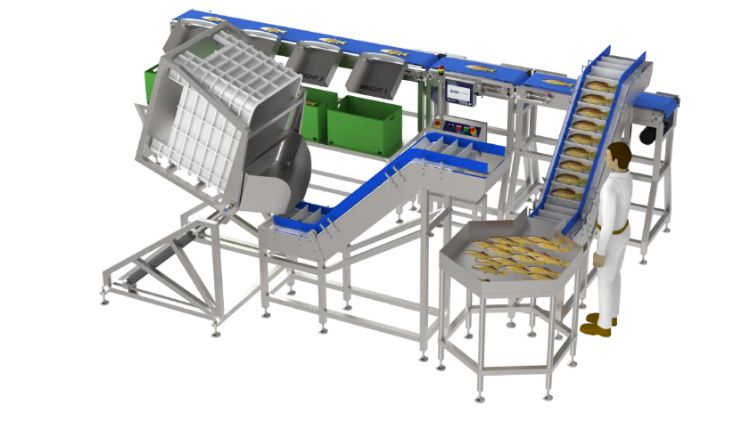
Automated fish sorting systems are designed to streamline grading operations by combining weighing, sizing, labeling, and product handling within a single workflow. As fish move along the conveyor, the system uses precise sensors to measure weight and sorting criteria in real time. This allows each product to be classified quickly and consistently without interrupting production flow. In facilities where fish of different sizes and weights are processed on the same line, this kind of automation improves both speed and accuracy while reducing the need for manual intervention.
A key part of the process is automatic weight labeling. After each fish is measured, the system can instantly transfer the weight data to the labeling unit so the correct information is applied to the package. This helps prevent shipping issues caused by incorrect labeling and supports more reliable inventory and logistics processes. Because the system is built to work continuously, operators mainly monitor performance rather than handling each product manually, which helps reduce labor pressure during busy production periods.
For businesses looking to improve grading efficiency, advanced automated fish sorting systems can support consistent product classification, faster packaging preparation, and more dependable production control. ERS Checkweigher also emphasizes data recording, which makes it easier to track individual weight results, monitor defective package rates, and review production trends over time.
Supporting quality control with smart automation features
Beyond basic sorting, automated fish sorting systems work by integrating several supporting technologies that keep the line accurate and stable over long runs. High sensitivity sensors measure fish at fine weight and size levels, while automatic calibration and smart auto reset functions help maintain reliable readings even during intensive production. The system is also described as being designed to resist common production-line influences such as humidity, temperature, vibration, and water exposure, which is especially important in fish processing environments.
Operators manage the process through a 10.2 inch color touch panel that shows weighing data, sorting results, labeling status, alerts, and statistical graphs in real time. This gives production and quality teams a clearer view of line performance and makes it easier to detect deviations early. Features such as easy conveyor change and multiple language options further improve usability, hygiene management, and flexibility across different production setups. As a result, automated fish sorting systems do more than sort fish by weight or size. They create a more controlled, efficient, and traceable production process from start to finish.